
This is a year-long project partnered with Microsoft. I am working with director and executive members of Microsoft, Dean, and head of the department to deliver final hi-fidelity UX project. This project started on Jan 13th, 2022, and is still ongoing.
Project context
Research + Design iterations.
Our goal is to develop a platform that connects students and practitioners via mini mentorship programs.
My role is a UX Researcher who conducts qualitative and quantitative researches and data analyzation.
Objectives
Most of jobs for recent college graduates requires internship experiences. It is challenging to get internships for students who does not have proffer skill set.
Practitioners would like to mentor students and network with other mentors.
Researcher questions developed are:
How can we help those students to obtain the skill set they need for the job market?
How can we help practitioners to connect with students and other mentors?
The intended outcome of this project is to design a platform for ‘mini-internship’
Two Types of Mentors
In a big category, there are two types of mentors.
For people who value giving back, creating experiences that show the impact of their contribution to the community can motivate them. For people who value their personal improvement, creating experiences that help to grow their personal values will motivate them to be part of the mentorship program.
[Value gaining personal benefits]
[Value giving back to society]
“To me, this [Mentorship] is more of an opportunity for bridging communities, bridging worlds, bridging the gap. And I am proud to do my little part in that through this mentorship program.”
— (Parise & Forret, 2008)
“Recruitment messages may include motives such as gaining career experience and strengthening social relationships.”
— (Larsson et al., 2016)
Competitive Analysis
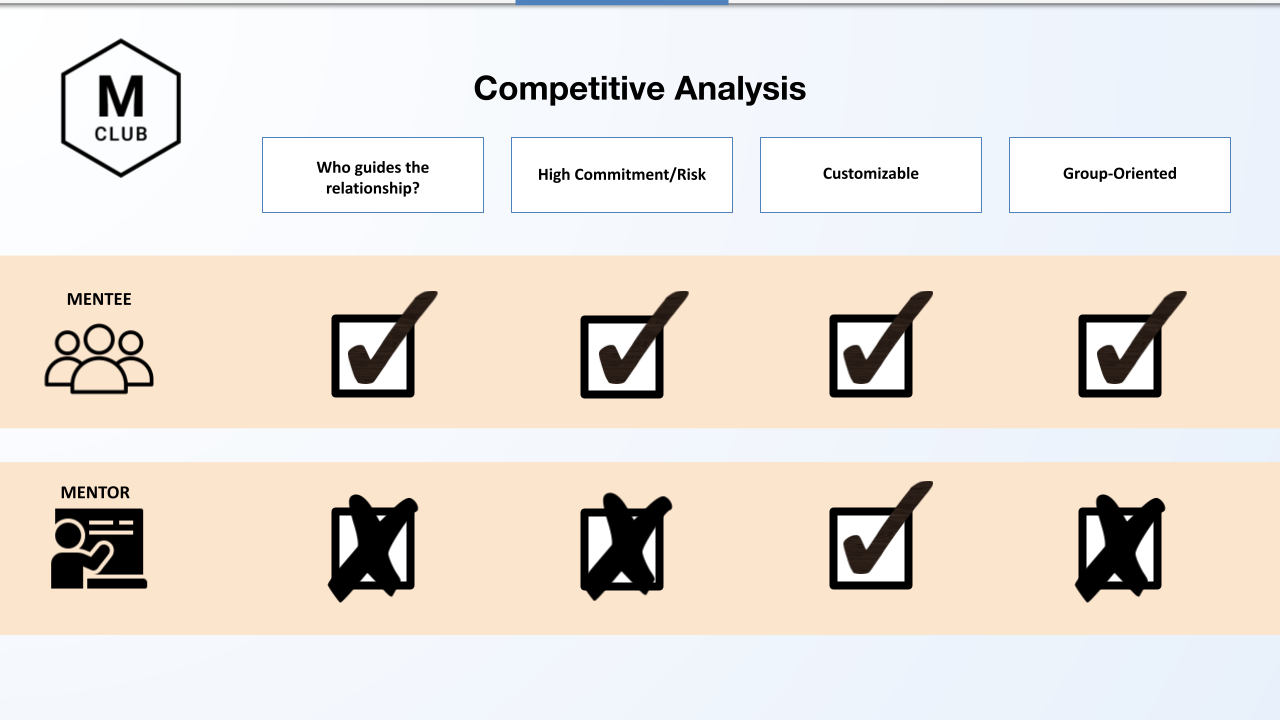
Based on competitive analysis, the four takeaways we would like to carry to the next step are, First, they form the community to communicate using Slack or their own platform.
Second, The mentorship Phases were divided by weeks or months per session of mentorship.
Third, Among those three platforms, two of them encouraged peer connections for both mentors and mentees.
Lastly, Asking leadership style plays a significant role in matching mentees and mentors successfully.
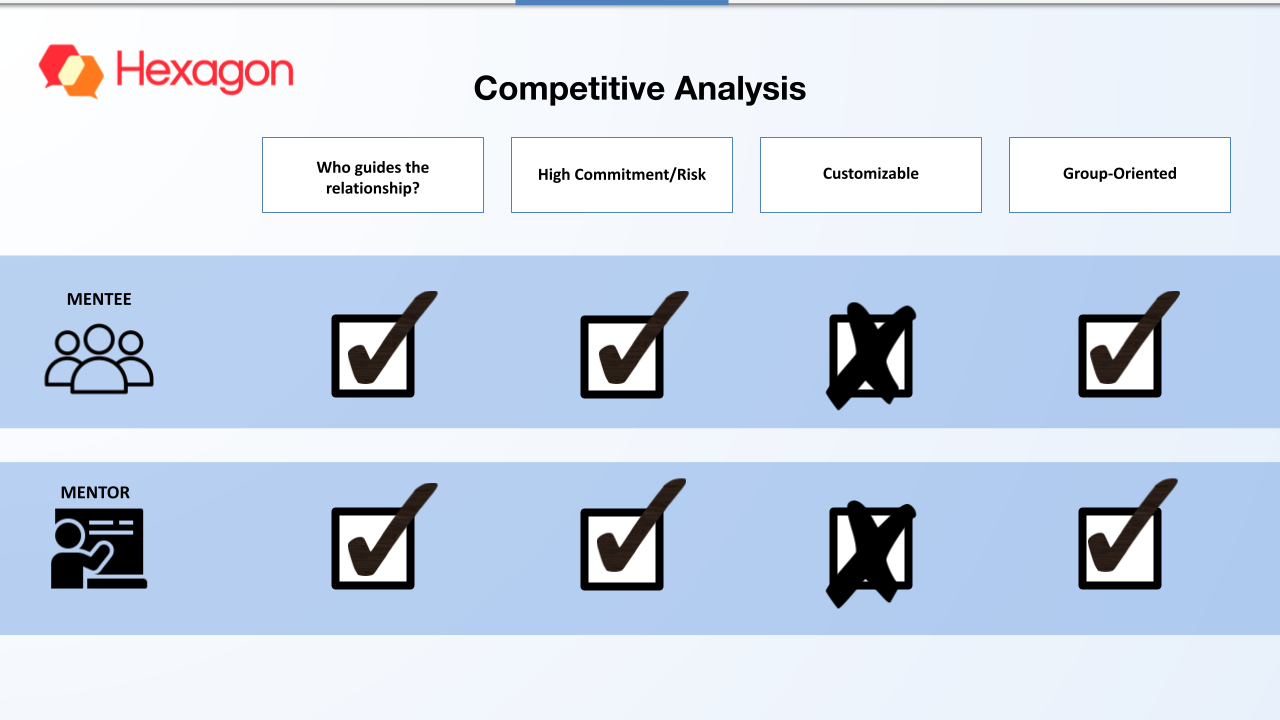
Hexagon is a mentoring program built through a Slack workspace, where people meet in person. It is nice because it is meant and specialized for female and non-gender-conforming UX people. They meet up in large cities and network and mentor each other.
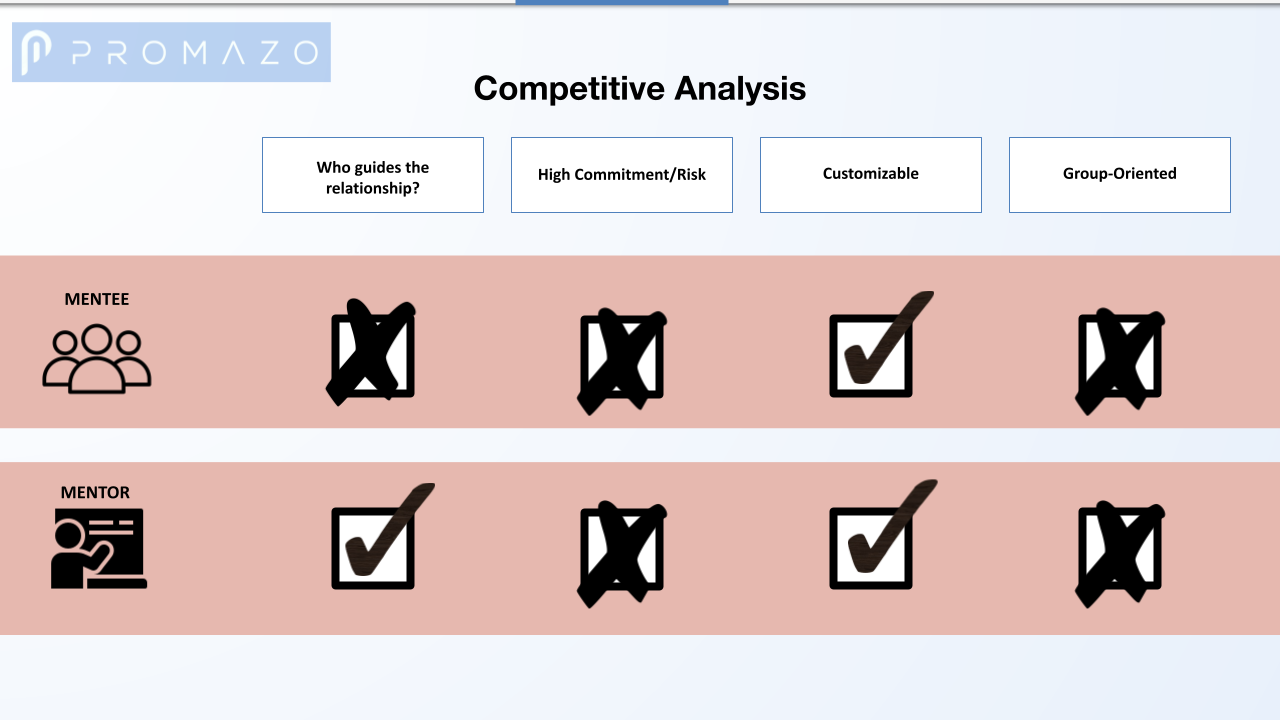
Promazo is its own app, where both parties fill out a lengthy questionnaire and get paired up through the com
The Motivation of Mentor and Mentee
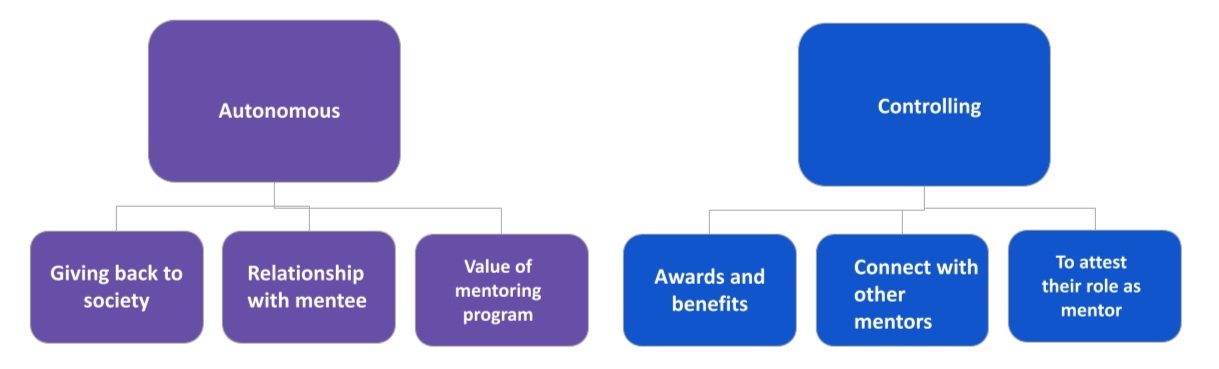
According to Brumovska and Brady (2021), There are two types of motivation for mentors.
1. Autonomous. Giving back to society, establishing relationships with the mentee, and the value of the mentoring program drives mentors.
The more autonomous the actions are, the more congruent they are with the authentic self of the person and the more they express the endorsement, authenticity, and unity between the self and exhibited behaviors.
2. Controlling. The controlling motivations for the mentors are first the rewards and benefits, such as connecting with other mentors, attesting, and confirming one’s competence as a role model.
Survey
Based on comparative analysis and literature reviews, we created survey to understand our user groups in detail.
Purpose of the survey was to inform our solutions when creating opportunities for more meaningful and impactful mentoring experiences in the future.
Actions: We created a google form based on the literature reviews and comparative analysis. There were total of 28 sections of question for both mentor and mentee. The survey was designed to take less than 10 minutes for those who 18 and older.
The survey was anonymous.
Outcome: The survey data collected analyzed by team, and we generated action items for interview protocols and final design.
Survey Analysis
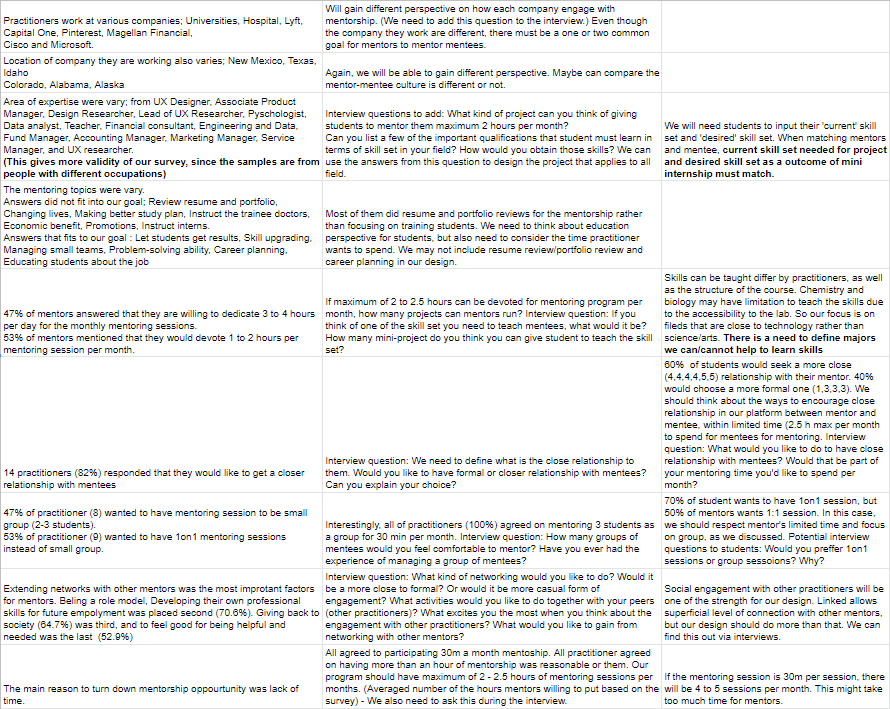
We analyzed survey result by ‘Most pressing points of the answers’, ‘High priority action items’, and ‘Data comparison among mentor and mentee’.
Survey Analysis
Improving communication skills (76%) motivates mentors the most. Career improvement and personal satisfaction like giving back to society came second (53%), and networking with others was last (47%)