
Enculturating freshman UX design student at Purdue
I worked with three graduate students to create a sense of belonging and community among freshman Purdue UX students during the summer months leading up to their first semester at Purdue University.
Project duration: 4 weeks
Oct 26, 2020 - Nov 30, 2020
“As incoming students, we’re inundated with 70 different things. […] I am lost where to begin with engaging with my cohort and Purdue UX community on campus.”
— SARAH, FIRST YEAR PURDUE UX STUDENT
Our goal of the project is providing different touchpoint with UX research methodology to encourage community engagement and a sense of belonging among new Purdue UX design students by reaching out to them consistently and directly with information they need to know over the summer months.
Final Design
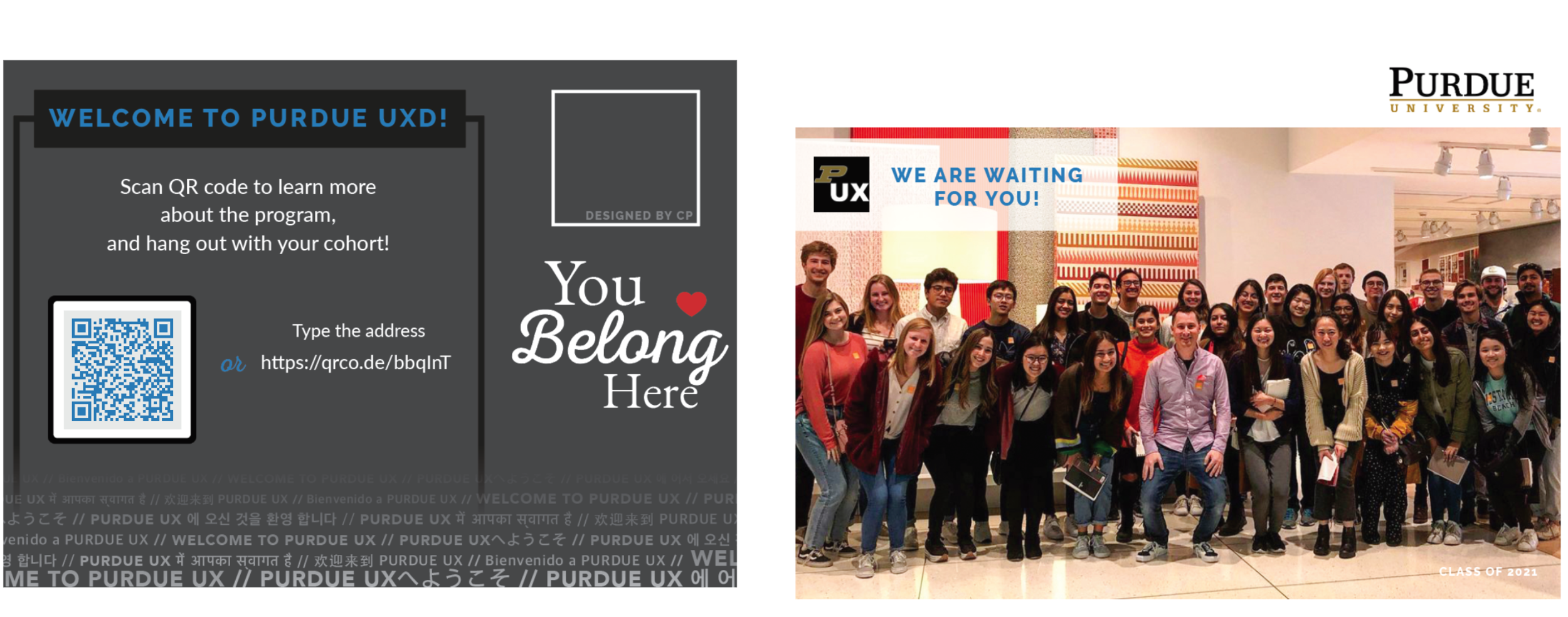
Front of postcard, picture of current Purdue UX cohort
Postcard design featuring QR code linked to online guidebook
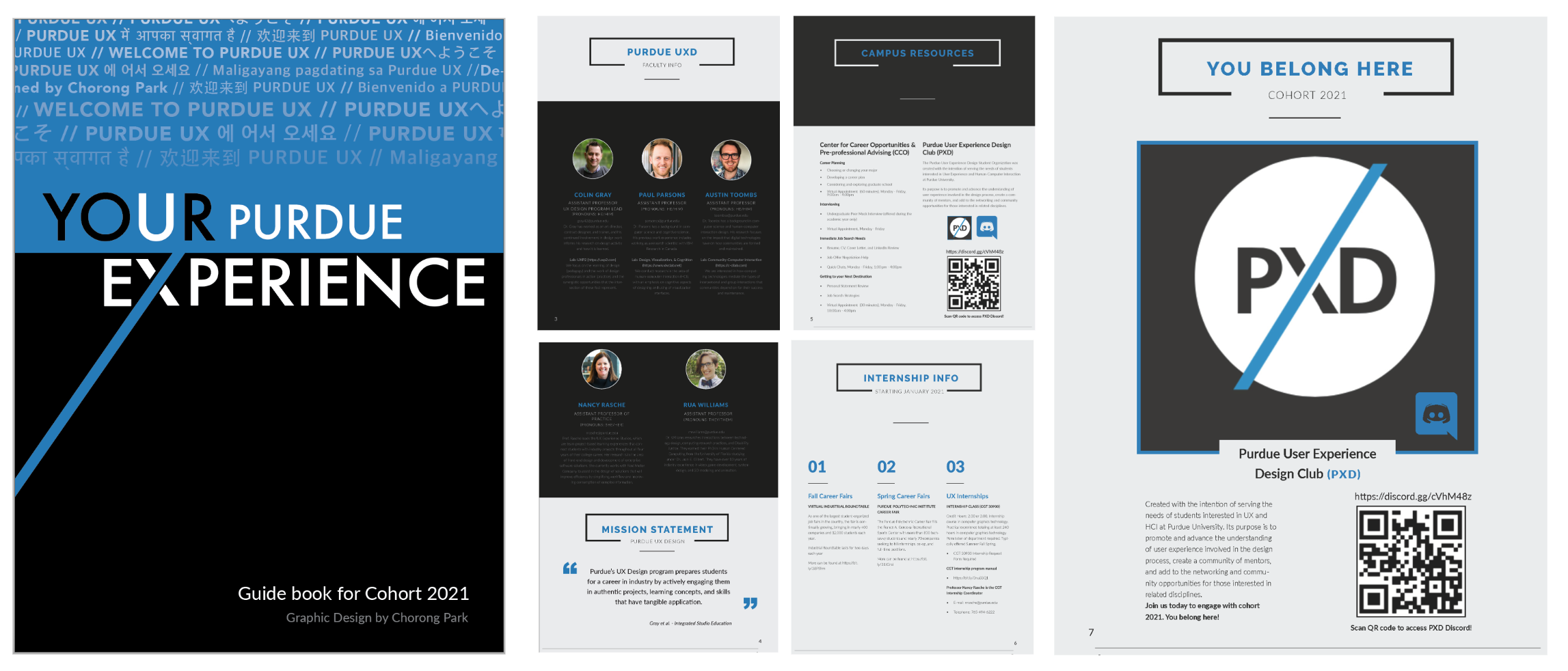
Guidebook includes front cover, faculty info, campus resources, internship info, and Purdue UX design club pages
Graphic Design by Chorong Park
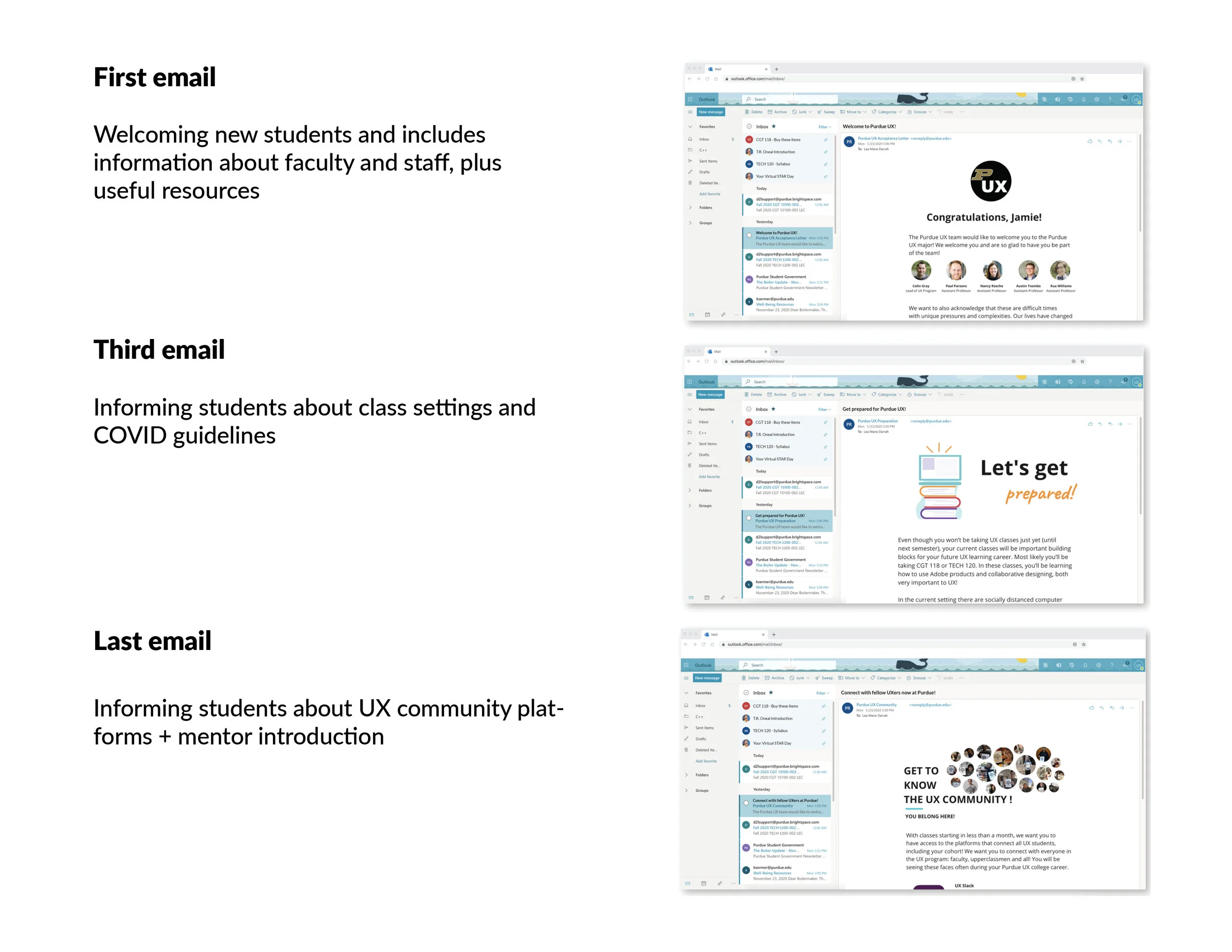
Three separate email campaign adapted from current email sent to first year students
Email design by Lea Darrah
Final Design Video
Project Context
Freshman students who are majoring in UX Design were having a hard time fitting into the current UX Design community. There are multiple aspects of problems, and we were trying to figure out how to encourage freshman year students to feel they belong to their community.
My responsibility included hosting and designing co-design sessions with current UX Design students at Purdue, conducting in-depth user research, interview analysis, and designing high-fidelity postcards and online brochures for the tangible experience.
Key problems
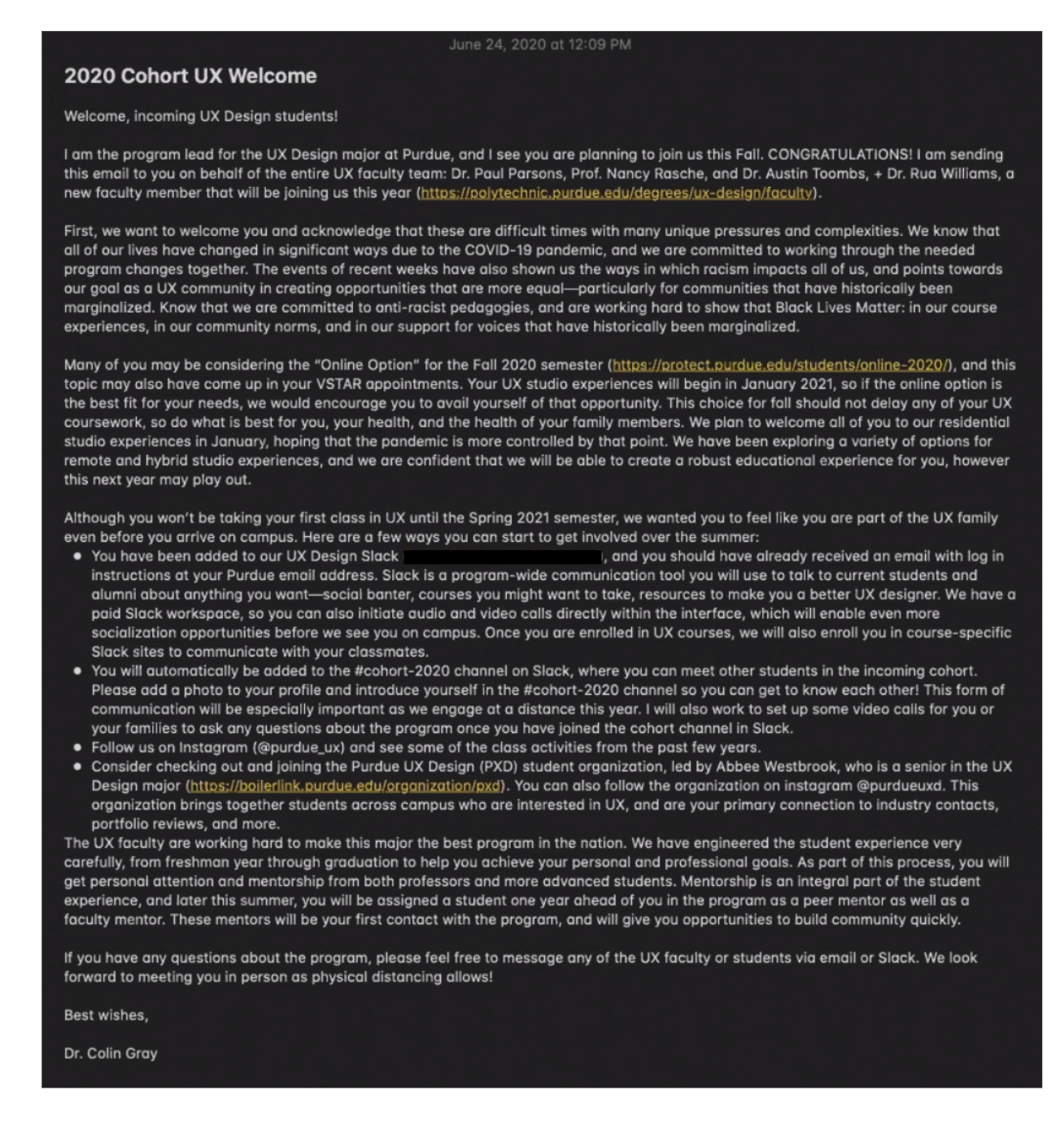
“Slack thing came in an email, and couple like mass emails to people, but it was nothing super”
- First year Purdue UX student
Current email sent to first year UX Design students from Dr. Colin Gray
Based on our interview, first year students receive one email early in the summer from a faculty member. The email contains information about the Purdue UX program including faculty, current events, online courses, Slack, and PXD Discord.
This email went mostly unnoticed by our three interviewees, opening up our first window of opportunity.
While I was asking questions to UX freshmen during the Co-Design session, I found that they were overwhelmed by the formality and unfamiliarity of using Purdue UX Design Slack channels and the email they receive.
In-Depth User Research and interviews
Our user research has been split into three activities: learning more about the importance of enculturation and its effects on students, freshman interviews, and Co-Design.
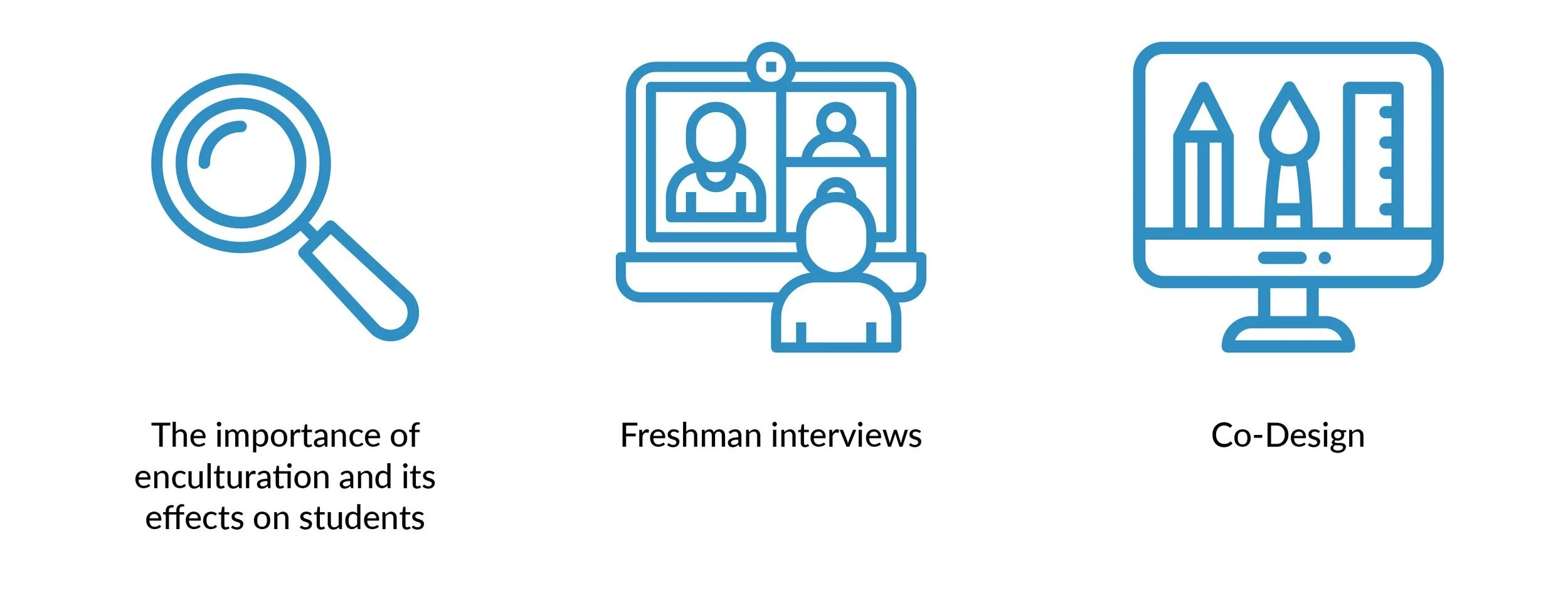
Research and interview process
We interviewed three freshman students and analyzed the main barriers that push freshmen back to socialize with the Purdue UX community and their cohort.
The Co-Design session we hosted for the summer stage, along with other teams who are in charge of the early fall and late fall stage, gave ideas on how to break the social barriers to naturally encourage community engagement.
Considering the multiple factors freshman students need to focus on over the semesters, we considered implementing enculturation practices in a relaxed and casual manner during the summer transition.
Co-design with freshman UX students
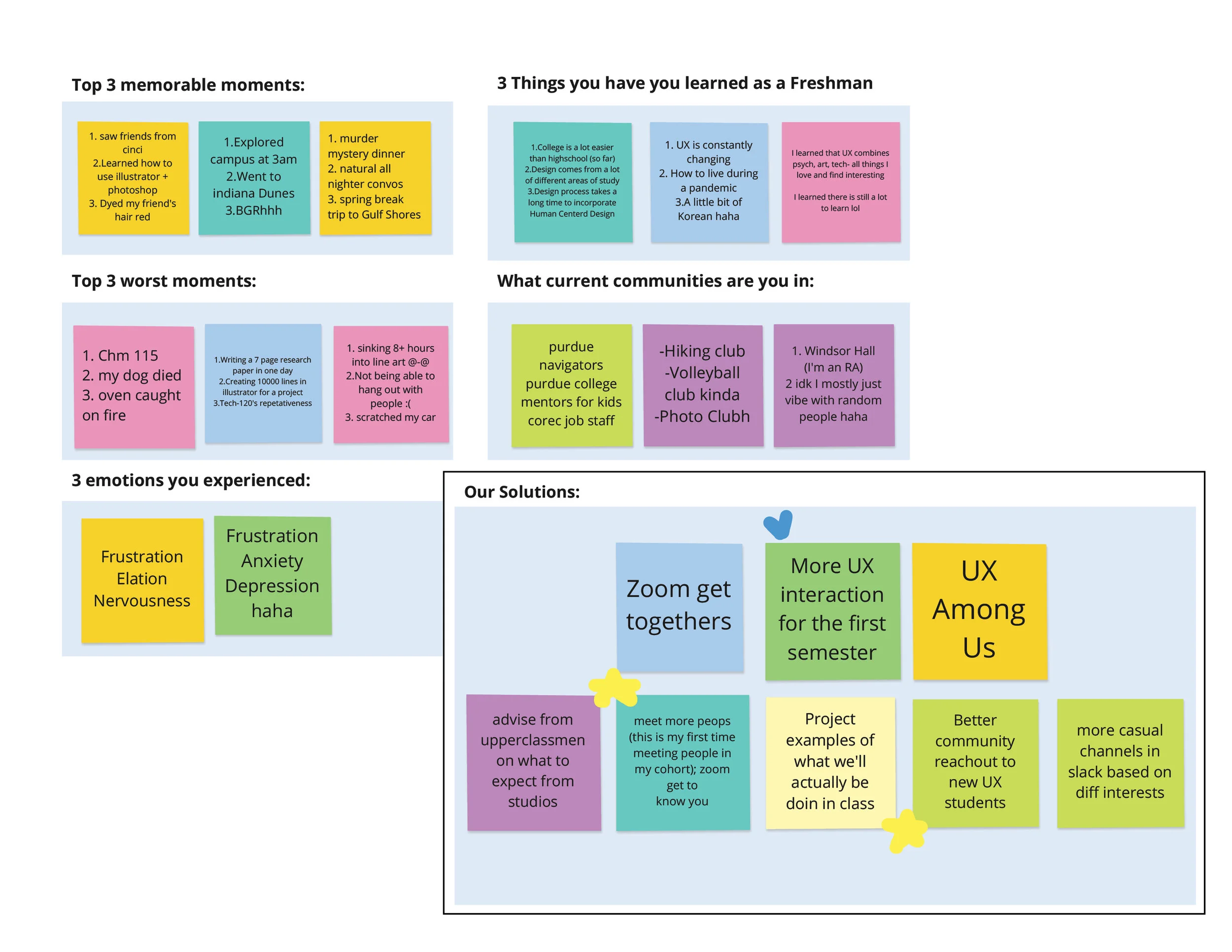
Co-design with freshman through Zoom video call using Miro board
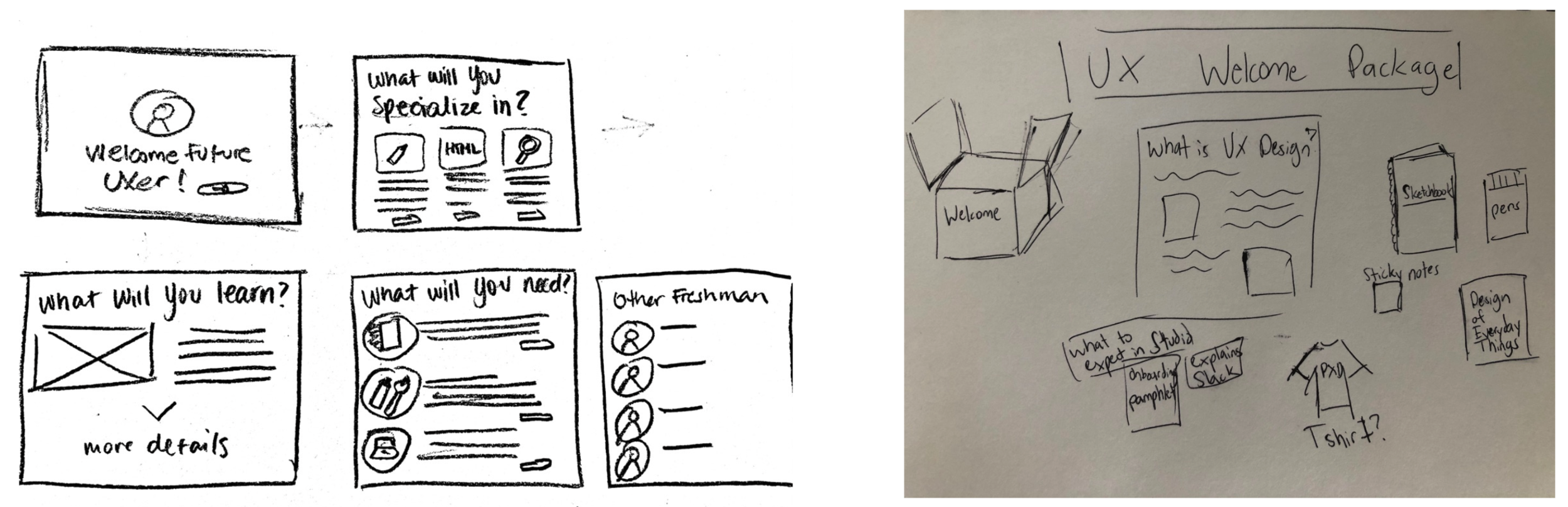
Desired structure of welcome email and package sketches from freshmen
From the Co-design sessions including UX freshmen, sophomore and senior, we were able to scope down their desired form of enculturation during summer months. The session helped me to understand what are limitation and frustration of UX freshman, and to think about the reasonable ways to change current experience, considering current work loads on professor, as well as cost effectiveness.
For the summer months, the biggest barrier is the formality of email and Slack channel that overwhelms students which pushes them start engaging.
How might we successfully start to enculturate UX student during the summer months, with the information they need to know in informal way?
Scoping down ideas
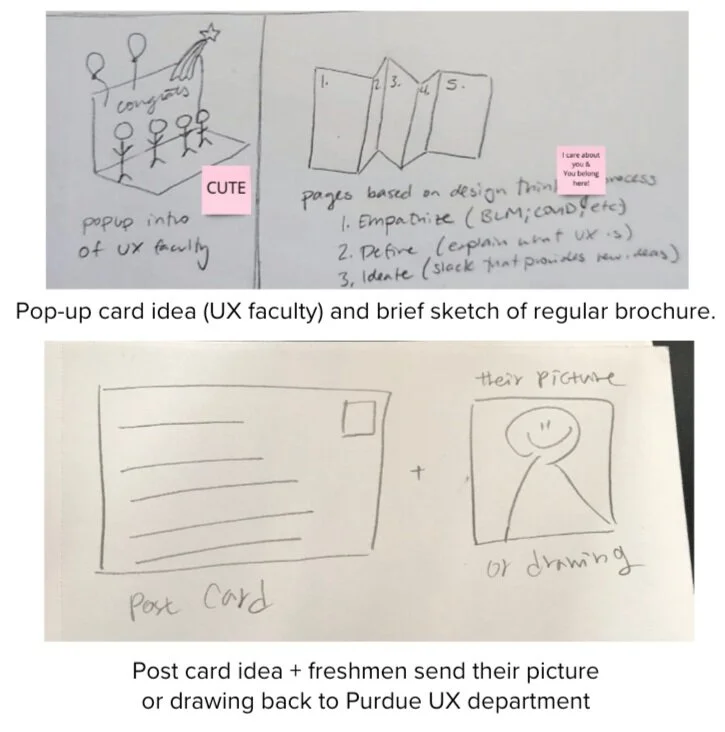
To provide tangible experience that are limited during COVID-19, we decided to create post-card with e-guidebook, along with three short emails that are more informal and visually pleasing.
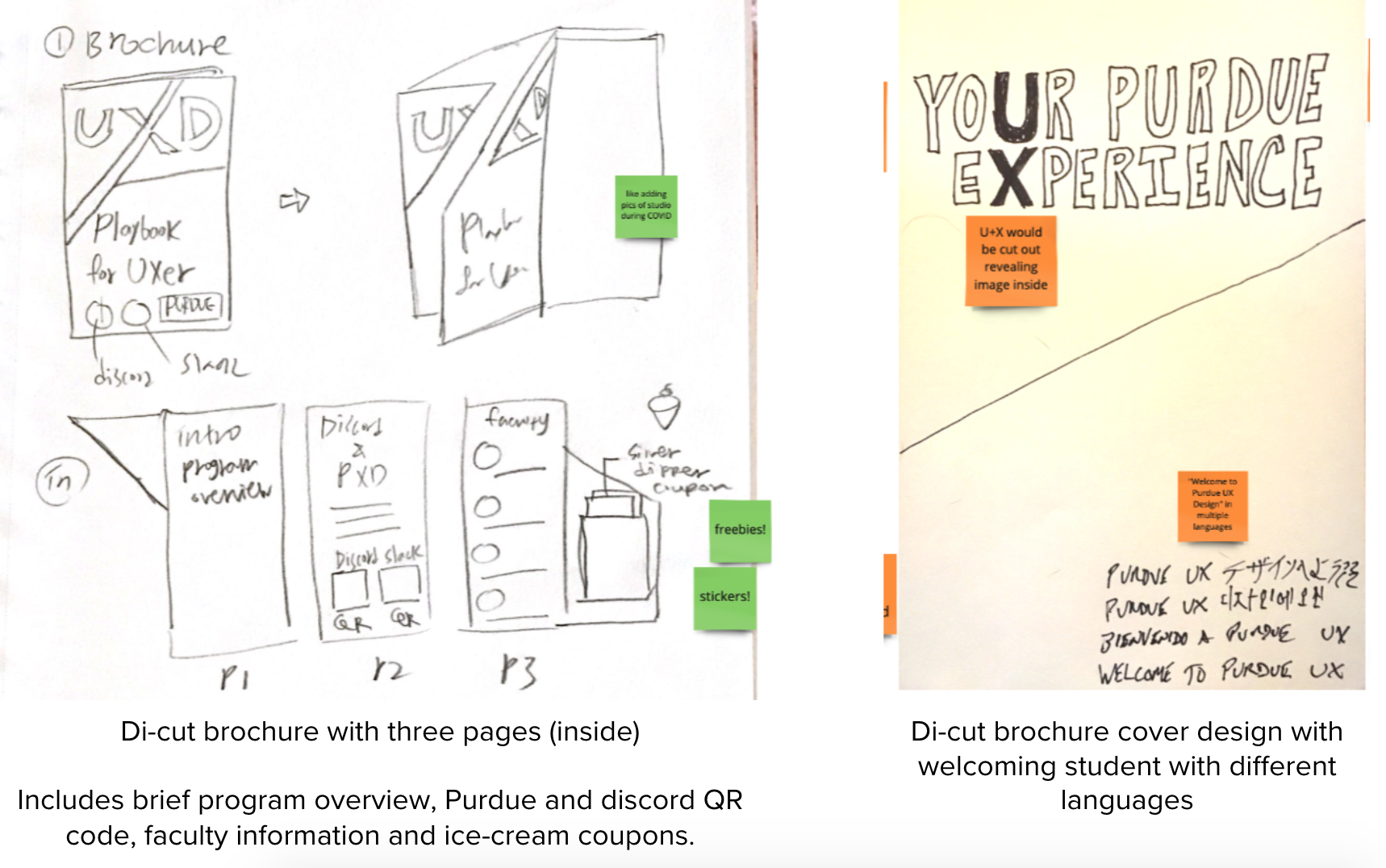
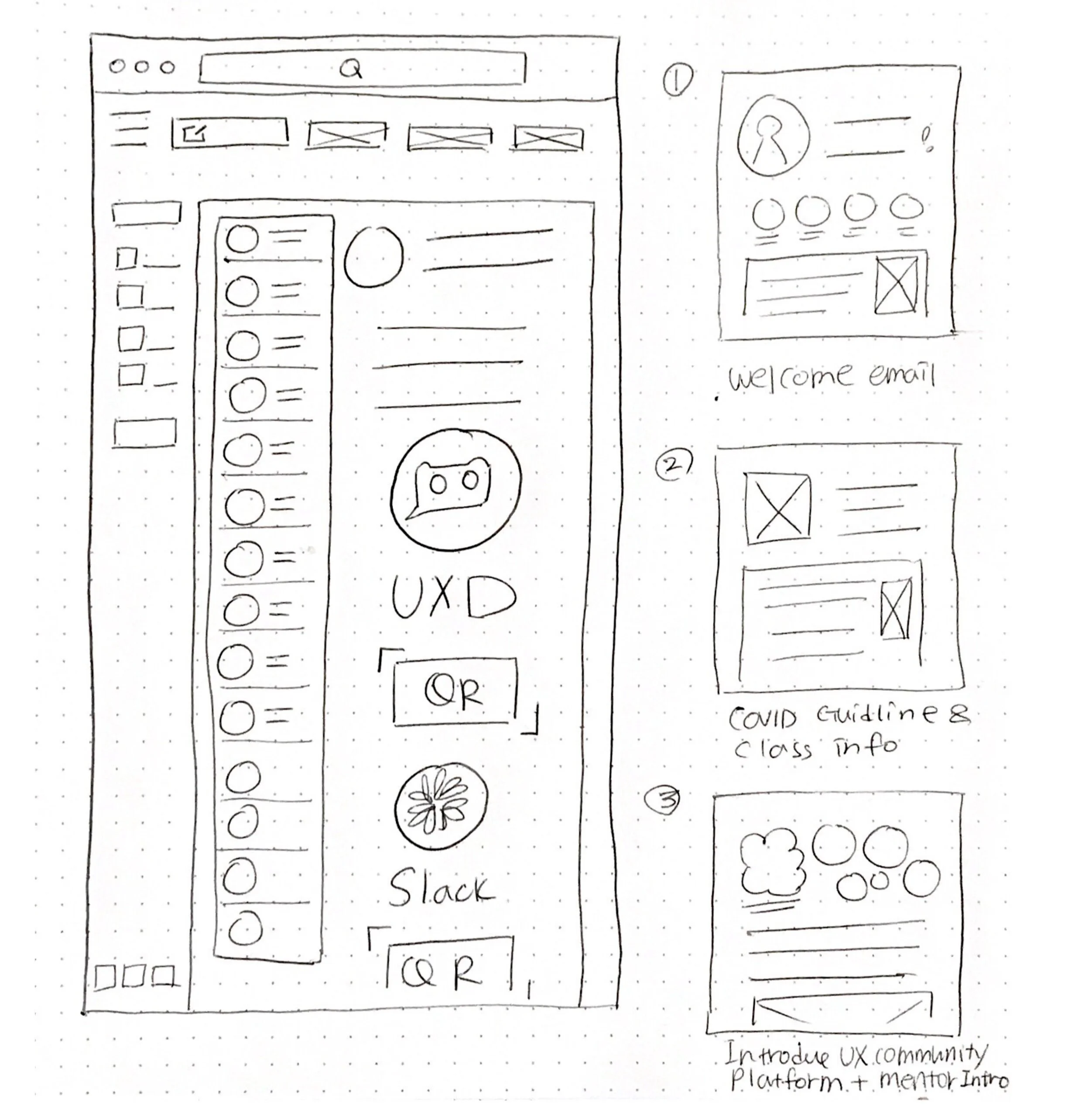
Email campaign sketch
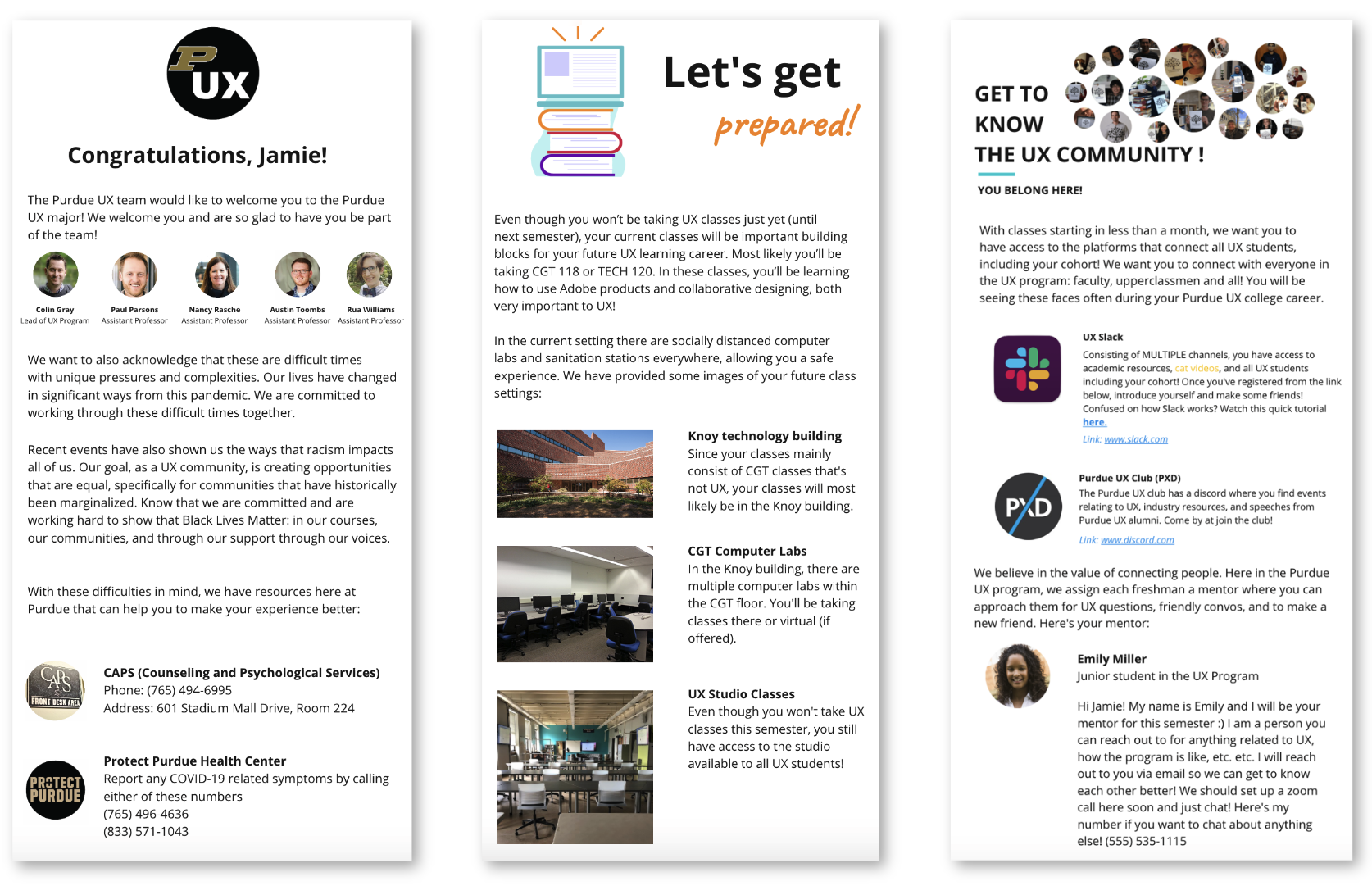
Email design by Lea Darrah
We aimed to gradually ease the flow of information through email which transition from formal to informal communication. We evaluated Dr. Colin Gray’s email to see what topics were the most important to cover and decided to split the email by the following three topics: welcome, class expectations, and UX community.
Creating design and refining: Online Guidebook
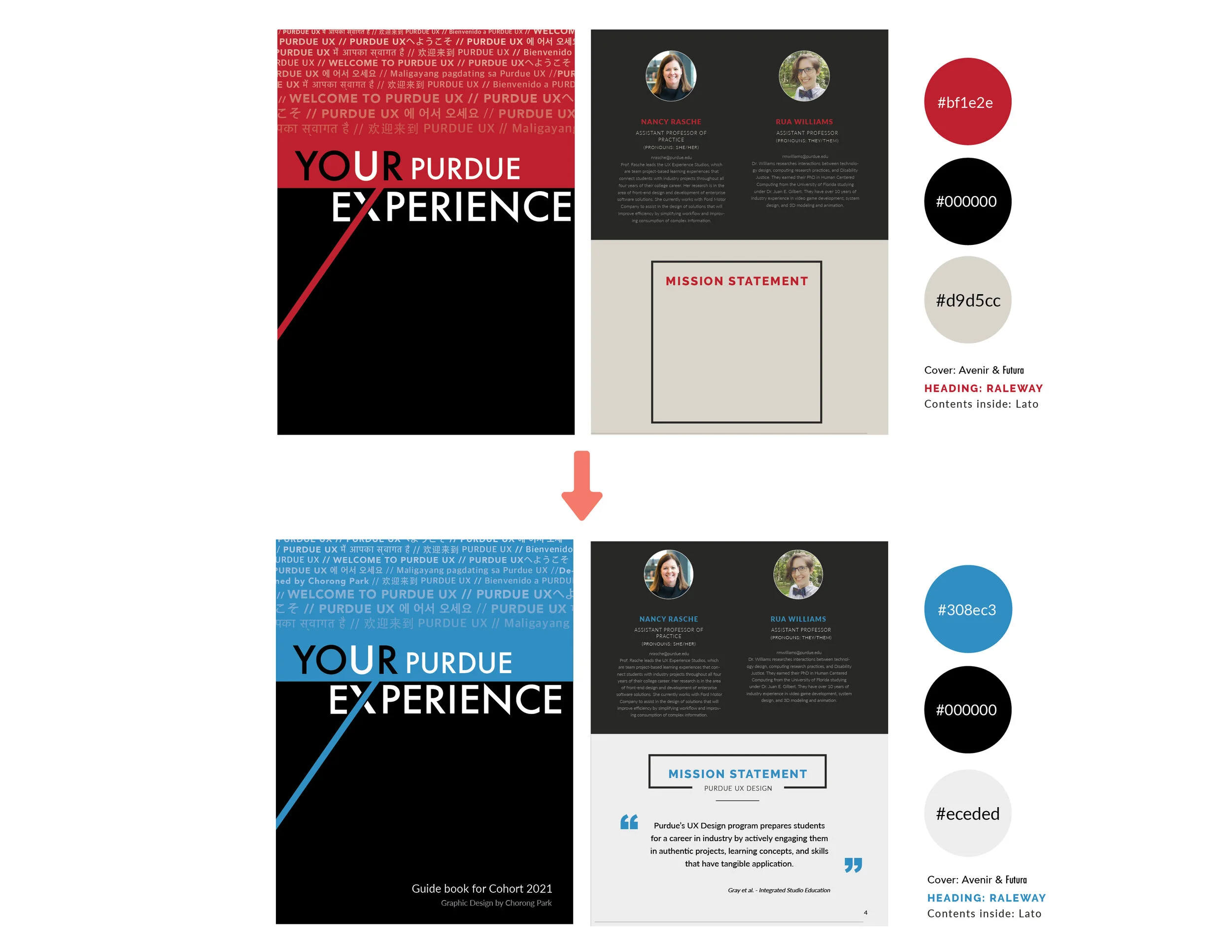
The color combination of the first version was hard to read for people with color vision deficiency, so I changed colors
to improve this.
The primary goal of the online brochure is: provides necessary information such as faculty info, internship opportunity, campus resources, and introducing the Purdue User Experience club on Discord to initiate the engagement.
Creating design and refining: Post Card
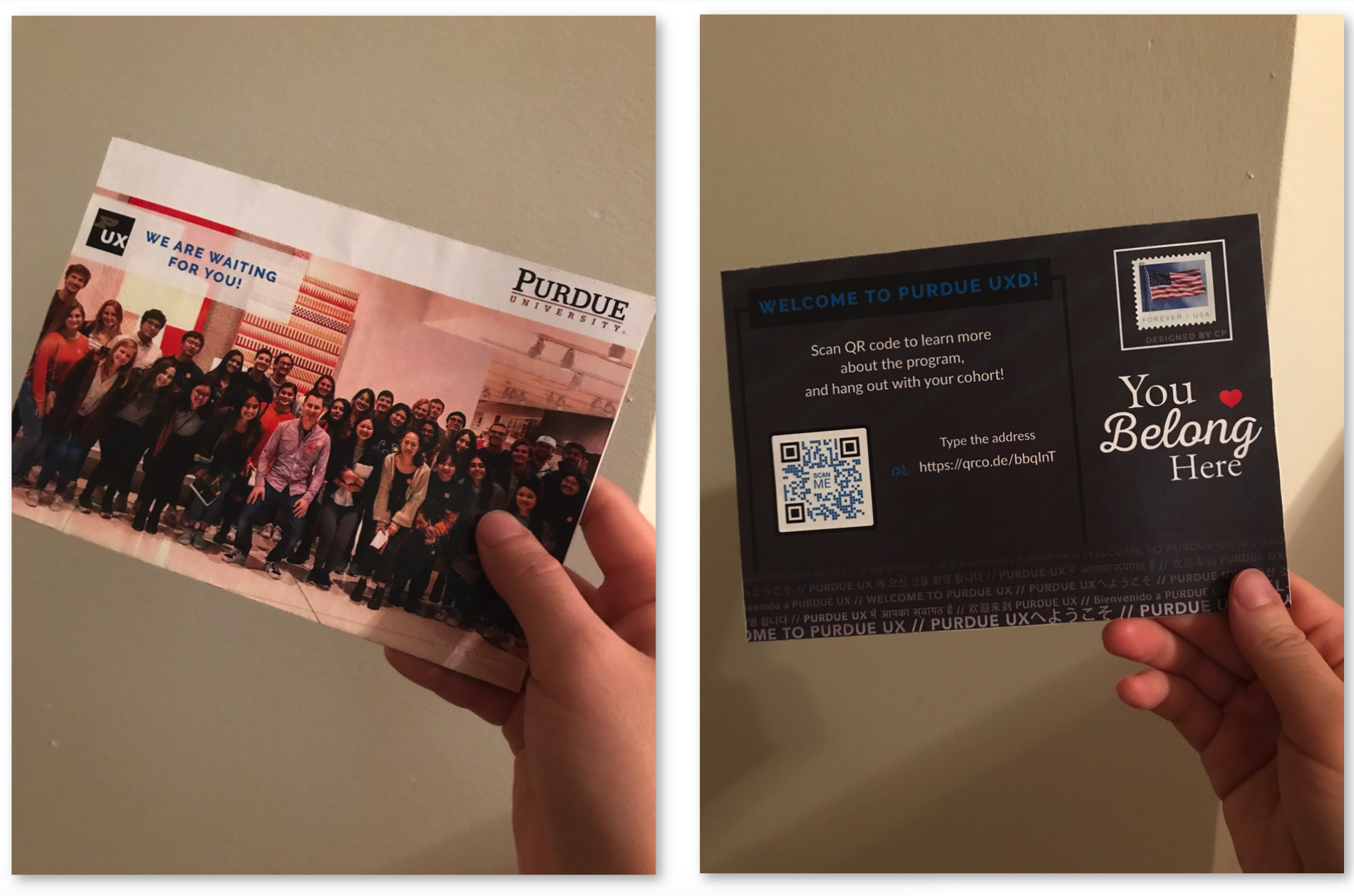
Back of postcard (right) features QR code that links directly to digital version of guidebook along with welcome message and “You Belong Here” tagline
Front of postcard (left) features photograph of recent Purdue UX undergraduates
The goal of creating postcard was that gradually pull freshmen students into UX Design community with tangible experience, implicating the excitement of belonging the UX community.
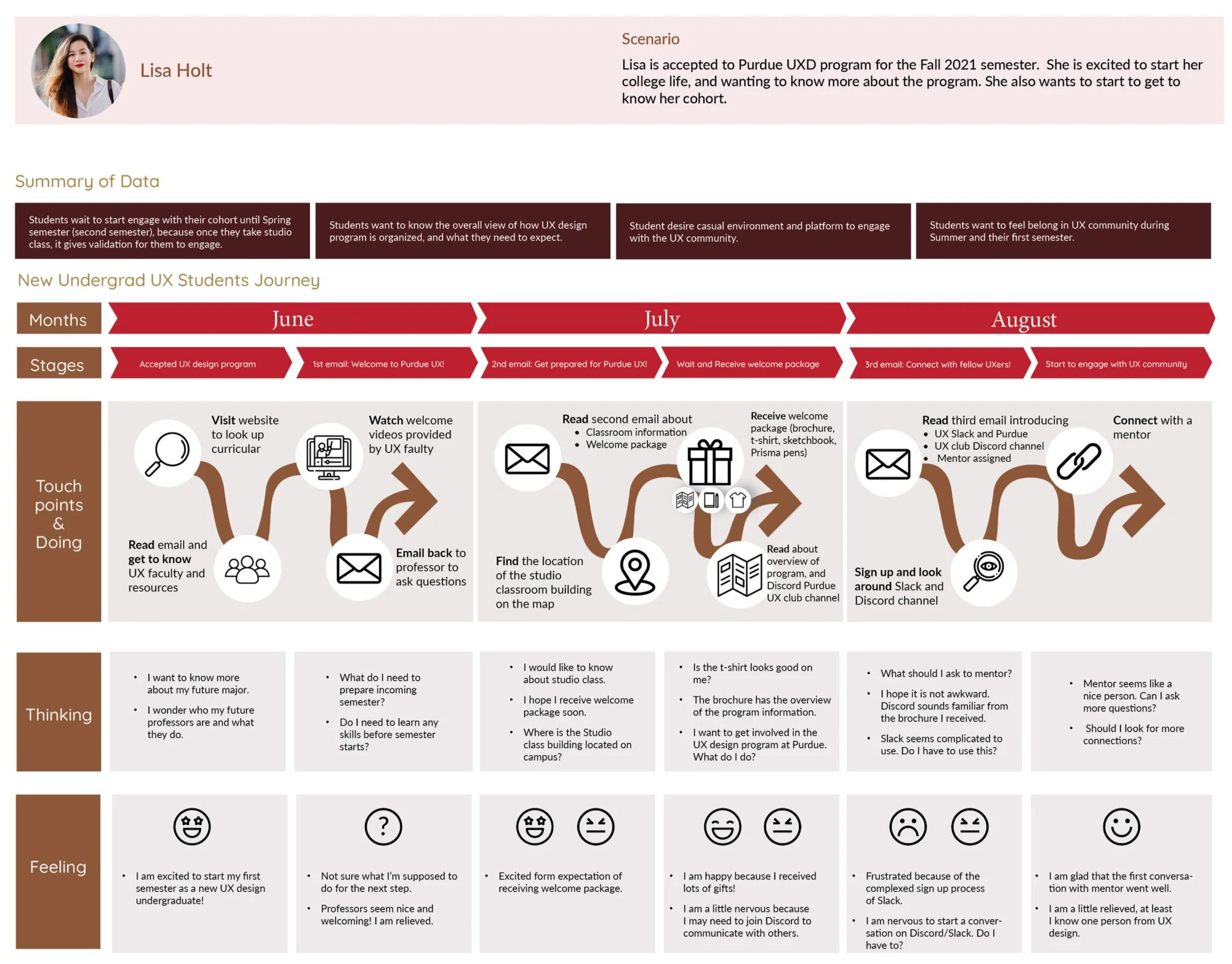
Desired experience of first year UX student
Next step
To validate to see if our design fit into Purdue UX design program, it would be essential to work with professors and students. For our final design critique, we invited first year student as well as Junior and sophomore UX students to get some opinion on our finalized designs. They were excited about the idea of postcard, guidebook with three separate email campaign to encourage first year student to engage during the summer. They mentioned that it catch their attention and keep it by providing multiple different source of information with different touchpoint.
Later, we were informed that faculties are working on incorporating our design into a Purdue UX microsite. This will be great starting point for improving the experience of Purdue UX freshman students! We are very excited to hear from freshman who will be subjected to our design next summer ❤️
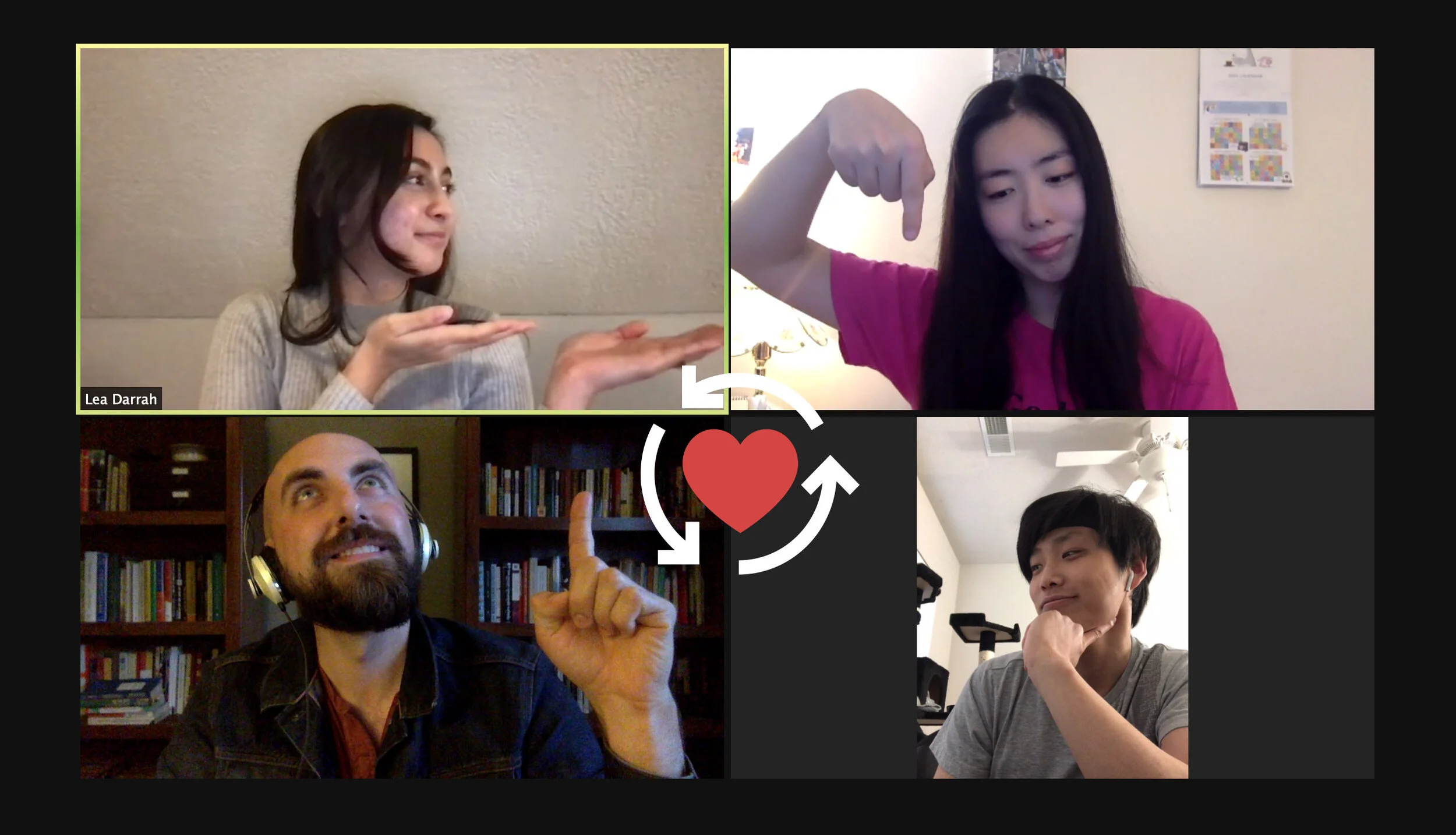
Team picture for the graduate studio class I
Reflection
This was one of the most enjoyable project thanks to my teammates. I am thankful that my team was always supportive, responsive and helpful over four weeks.
Working with freshmen students were meaningful experience to me as a UX designer. I was able to look back my freshman year which gave me deeper empathy for understanding freshman students.
References
[1] Diekamp, O. (2007). Interpersonales Wissen und kooperatives Lernen im virtuellen Seminar [Interpersonal knowledge and cooperative learning in a virtual seminar]. Berlin: Logos.
[2] Holloway-Friesen, Holly. (2016). Acculturation, Enculturation, Gender, and College Environment on Perceived Career Barriers Among Latino/a College Students. Journal of Career Development. 45. 10.1177/0894845316668641.
[3] McMillan, D. W., & Chavis, D. M. (1986). Sense of community: A definition and theory. Journal of Community Psychology, 14(1), 6–23.
[4] Wenger, E. (1999). Communities of practice, learning, meaning, and identity. Cambridge, UK: University Press.